Abs exercise PDFs offer structured workout plans, detailing routines from basic crunches to advanced V-ups, aiding core strength and fitness goals effectively.
What are Abs Exercises?
Abs exercises, frequently detailed within PDF workout guides, encompass a diverse range of movements designed to strengthen the muscles of the abdominal region. These exercises aren’t simply about achieving a sculpted “six-pack”; they fundamentally improve core stability, crucial for everyday movements and athletic performance. PDF resources often categorize these exercises by difficulty, starting with foundational movements like basic crunches and leg raises.
More advanced abs exercises, commonly found in comprehensive PDF plans, include variations like hanging leg raises, Russian twists, and challenging movements such as V-ups. The core focus remains consistent: engaging the rectus abdominis, obliques, and transverse abdominis to build strength and endurance. Utilizing PDF guides allows for structured progression and proper form guidance.
Why Use a PDF for Abs Workouts?
Abs exercise PDFs provide a convenient and accessible method for structuring your fitness routine. Unlike relying on online videos requiring constant internet access, a PDF can be downloaded and used anywhere, anytime. Many PDF workout plans offer progressive programs, guiding you from beginner to advanced levels with clear instructions and visual aids.
Furthermore, PDFs often detail specific sets, repetitions, and rest periods, eliminating guesswork. They can also include variations of exercises, catering to different fitness levels and preferences. The portability of a PDF allows for easy tracking of progress and customization, making it a valuable tool for achieving your core strength goals. Choosing a quality PDF ensures safety and effectiveness.

Core Muscle Anatomy for Exercise
Abs exercise PDFs target key muscles: the rectus abdominis, obliques, and transverse abdominis, building a strong core for improved stability and function.
Rectus Abdominis
Abs exercise PDFs frequently emphasize the rectus abdominis, the “six-pack” muscle running vertically on the abdomen. Strengthening this muscle is central to many core workouts. PDFs detail exercises like crunches and leg raises specifically designed to isolate and build the rectus abdominis.
Effective PDF programs will often include variations, progressing from beginner-friendly moves to more challenging techniques. Understanding its function – flexing the spine – is key. Many PDFs highlight the importance of proper form to avoid injury while maximizing engagement. Targeted exercises within these PDFs contribute to a visibly toned abdomen and improved core stability, enhancing overall athletic performance and posture.
Obliques (Internal & External)
Abs exercise PDFs dedicate significant attention to the obliques – internal and external – crucial for rotational movements and side stability. These muscles, located on the sides of the abdomen, are often targeted alongside the rectus abdominis for a well-rounded core workout.
PDFs commonly feature exercises like Russian twists and side planks to engage the obliques. Variations are often included, increasing difficulty and targeting different fibers within the muscle group. Strengthening obliques improves posture, enhances athletic performance, and contributes to a sculpted midsection. Quality PDFs emphasize controlled movements and proper form to prevent injury and maximize effectiveness, ensuring balanced core development.

Transverse Abdominis
Abs exercise PDFs increasingly highlight the importance of the transverse abdominis (TVA), the deepest core muscle. Unlike exercises focusing on visible “six-pack” muscles, TVA training emphasizes core stabilization and internal support. PDFs often include exercises designed to activate the TVA without significant movement, like vacuum exercises and controlled planks.
Strengthening the TVA improves posture, reduces lower back pain, and enhances overall core function. Many advanced PDFs detail progressive TVA exercises, building from basic activations to more challenging routines. Proper engagement of the TVA is crucial for safe and effective exercise, and quality PDFs provide detailed instructions and visual aids to ensure correct form.

Types of Abs Exercises Included in PDFs
Abs exercise PDFs commonly feature crunches, leg raises, and planks, alongside variations for progressive overload and targeted muscle engagement for optimal results.
Crunches & Variations
Abs exercise PDFs frequently dedicate significant sections to crunches, recognizing them as foundational movements for rectus abdominis development. Basic crunches form the starting point, emphasizing controlled contractions. However, PDFs expand upon this with numerous variations to challenge the core further and prevent plateaus.
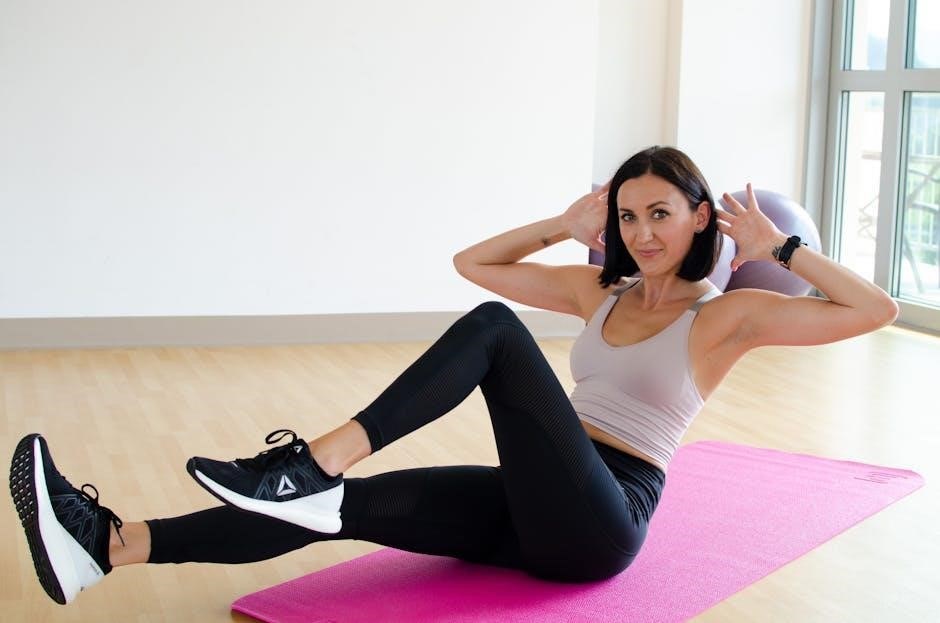
Common variations include bicycle crunches, engaging the obliques for rotational strength; reverse crunches, targeting the lower abdominal region; and weighted crunches, utilizing dumbbells or plates to increase intensity. Some PDFs detail cable crunches, employing resistance machines for a consistent load. Proper form is consistently emphasized within these resources, highlighting the importance of controlled movements and avoiding neck strain. Detailed illustrations and step-by-step instructions are typical features, ensuring users execute each variation safely and effectively.
Leg Raises & Hanging Leg Raises
Abs exercise PDFs consistently feature leg raises as a key exercise for targeting the lower abdominal muscles. These are often presented with progressions, starting with lying leg raises, focusing on controlled hip flexion and maintaining a neutral spine. Variations like scissor kicks are included to increase intensity and engage the obliques.

More advanced PDFs introduce hanging leg raises, a challenging exercise requiring significant core strength and grip endurance. These are often broken down into regressions, such as bent-knee hanging leg raises, for beginners. Detailed instructions emphasize avoiding swinging and maintaining a controlled descent. Many resources highlight the importance of bracing the core throughout the movement to maximize effectiveness and prevent lower back strain. Visual aids and form cues are commonly provided within these abs exercise PDFs.
Planks & Plank Variations
Abs exercise PDFs universally incorporate planks as a foundational exercise for core stability. These resources typically begin with the standard forearm plank, emphasizing proper form – a straight line from head to heels, engaging the core, and avoiding hip sagging. Progression is a key element, with PDFs detailing hold-time increases and introducing variations.
Common plank variations found within these guides include side planks, targeting the obliques, and plank with leg lifts, adding intensity and challenging balance. More advanced PDFs may feature walking planks or plank jacks. Detailed instructions often stress maintaining a neutral spine and breathing consistently. Many abs exercise PDFs provide modifications for different fitness levels, ensuring accessibility and preventing injury.

Benefits of Regular Abs Workouts
Abs exercise PDFs promote core strength, improved posture, and injury prevention through consistent training, enhancing overall physical function and stability.
Improved Core Strength & Stability
Abs exercise PDFs are instrumental in building a robust core, which extends far beyond just achieving aesthetic “six-pack” abs. A strong core, developed through consistent practice of exercises detailed in these PDFs, provides a stable base for all movement. This enhanced stability translates to improved performance in various physical activities, from everyday tasks like lifting and bending to more demanding athletic endeavors.
The core muscles, targeted by exercises within these resources, act as natural stabilizers for the spine and pelvis. Strengthening these muscles minimizes the risk of lower back pain and improves overall balance. PDF workouts often incorporate progressive overload, gradually increasing the intensity to continually challenge and strengthen the core, leading to noticeable improvements in functional strength and stability over time.
Enhanced Posture
Abs exercise PDFs frequently emphasize exercises that directly combat the effects of prolonged sitting and poor postural habits. Weak core muscles often contribute to slouching and rounded shoulders, leading to discomfort and potential long-term health issues. Targeted workouts within these PDF guides strengthen the muscles responsible for maintaining proper spinal alignment.
By strengthening the deep core muscles – often addressed in advanced PDF routines – individuals can improve their ability to maintain an upright posture with minimal effort. This not only enhances physical appearance but also reduces strain on the spine, neck, and shoulders. Consistent implementation of exercises from these resources promotes a more natural and balanced posture, contributing to increased confidence and overall well-being.
Injury Prevention
Abs exercise PDFs often highlight the crucial role a strong core plays in injury prevention, extending benefits beyond aesthetics. A robust core acts as a natural stabilizer for the spine, reducing the risk of lower back pain and injuries during various physical activities. Many PDF workout plans incorporate exercises designed to strengthen these stabilizing muscles.
By improving core stability, individuals can better control movement patterns, minimizing the likelihood of strains, sprains, and other common injuries. These resources frequently include progressions, allowing users to gradually increase intensity and challenge, further enhancing protective capabilities. Properly executed exercises, as guided by these PDFs, contribute to a more resilient body, safeguarding against potential harm.

Finding & Utilizing Abs Exercise PDFs
Abs exercise PDFs are readily available online, ranging from free introductory guides to premium, detailed workout programs for all fitness levels.
Free vs. Paid PDF Workout Plans
Free abs exercise PDFs often provide a good starting point, offering basic routines and foundational exercises suitable for beginners. However, these plans may lack the depth, progression, and customization options found in paid resources. They can be excellent for learning proper form and establishing a consistent workout habit.
Paid PDF workout plans, conversely, typically offer more comprehensive programs designed by certified fitness professionals. These often include detailed exercise instructions, video demonstrations, progressive overload strategies, and nutritional guidance. They cater to various fitness levels, from intermediate to advanced, and may specialize in specific goals like six-pack abs or core stability. While requiring an investment, paid plans generally deliver a more structured and effective training experience.
Consider your current fitness level, goals, and budget when choosing between free and paid abs exercise PDFs.
Evaluating PDF Quality & Safety
When selecting abs exercise PDFs, prioritize quality and safety. Look for plans created by qualified fitness professionals – certifications or credentials are a good sign. Ensure exercises are clearly explained with proper form cues; vague instructions increase injury risk. Beware of PDFs promising unrealistic results quickly, as these often promote unsafe practices.
Check for a disclaimer regarding individual health conditions; a good plan acknowledges the need to consult a doctor before starting. Avoid PDFs with excessively strenuous routines if you’re a beginner. Scrutinize the exercise selection – a balanced plan targets all core muscles, not just the rectus abdominis.
Finally, download PDFs from reputable sources to minimize the risk of malware or viruses. Prioritize informed choices for effective and safe core training.
Customizing PDF Workouts to Your Fitness Level
Abs exercise PDFs often provide a foundation, but personalization is key. Beginners should start with fewer repetitions and simpler exercises, focusing on form before intensity. Gradually increase reps, sets, and difficulty as core strength improves. Modify exercises to suit your capabilities – for example, performing knee raises instead of hanging leg raises.
Intermediate and advanced users can add resistance (weights, bands) or explore more challenging variations. Don’t hesitate to substitute exercises based on preference or equipment availability. Listen to your body; rest when needed and avoid pushing through pain.
Consider splitting workouts to target different core areas on separate days. A tailored approach maximizes results and minimizes injury risk, ensuring long-term progress.

Advanced Abs Exercises (Often Found in PDFs)
Abs exercise PDFs frequently include challenging moves like Russian Twists, demanding V-Ups, and intense Ab Wheel Rollouts, building significant core power.
Russian Twists
Russian Twists, commonly detailed within abs exercise PDFs, are a dynamic exercise targeting the obliques and rectus abdominis. Typically performed with or without weight – dumbbells, medicine balls, or even just bodyweight – this exercise involves sitting with knees bent and feet slightly elevated.
The core is engaged as you twist your torso from side to side, bringing the weight (or hands) towards the floor on each side. Many PDF guides emphasize maintaining a straight back and controlled movements to maximize effectiveness and prevent injury. Variations include holding a static position during the twist or increasing the weight for a greater challenge. Proper form, as illustrated in many abs workout PDFs, is crucial for optimal results and avoiding strain.
V-Ups
V-Ups are a challenging, full-core exercise frequently featured in advanced abs exercise PDFs. This movement begins lying flat on your back with arms extended overhead and legs straight. Simultaneously, you lift both your upper body and legs off the ground, aiming to form a “V” shape with your body.

Many PDF workout plans suggest modifications for beginners, such as bending the knees or performing half V-ups. Proper form, often visually demonstrated in these guides, is vital to avoid lower back strain. Engaging the core throughout the entire movement is key. Abs exercise PDFs often pair V-ups with other exercises for a comprehensive core routine, emphasizing controlled movements and progressive overload.
Ab Wheel Rollouts
Ab Wheel Rollouts represent a highly effective, yet demanding, exercise commonly found within advanced abs exercise PDFs. Utilizing an ab wheel, you kneel on the floor and slowly roll the wheel forward, extending your torso while maintaining a braced core and straight back. This movement intensely targets the entire abdominal region.
PDF workout guides often emphasize starting with small rollouts and gradually increasing the range of motion as strength improves. Proper form is crucial to prevent lower back injury; many PDFs include detailed illustrations. These resources frequently suggest modifications, like performing rollouts from the knees, for beginners. Combining ab wheel rollouts with other core exercises, as outlined in abs exercise PDFs, maximizes results.