This manual provides comprehensive laboratory exercises, spanning biology’s breadth from an evolutionary lens, adaptable for diverse courses and even human-focused studies.
Purpose and Scope
The primary purpose of this bio lab manual is to equip students with foundational skills in biological experimentation and analysis. It aims to bridge theoretical knowledge with practical application, fostering a deeper understanding of core biological principles. The scope encompasses a wide range of topics, from the scientific method and metric system fundamentals to biochemistry basics and essential laboratory techniques.
Specifically, the manual covers areas like enzyme activity, cell structure and function, and the observation of diverse biological specimens. It’s designed to be adaptable, allowing instructors to tailor the exercises to suit specific course orientations – including those with a human biology focus. The manual’s breadth ensures comprehensive coverage, while its customizable nature allows for focused learning experiences, ensuring student integration and comprehension of complex biological concepts.
Target Audience
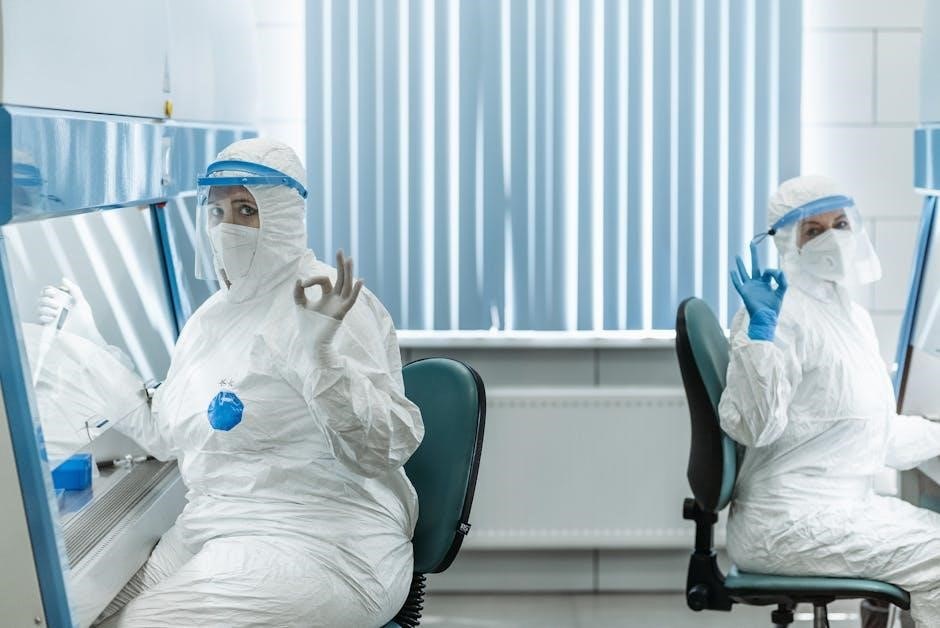
This bio lab manual is primarily intended for students enrolled in introductory biology courses, particularly those with a laboratory component. It caters to a diverse student body, ranging from freshmen exploring the fundamentals of life science to more advanced learners seeking hands-on experience. The manual’s design accommodates large classes, with experiments that are simple, safe, and easily performed within a single lab session.
Furthermore, the manual is suitable for students with varying levels of prior laboratory experience. Clear, step-by-step instructions and numerous photographs guide students through each procedure, ensuring accessibility and minimizing potential errors. The adaptable nature of the exercises also allows instructors to modify the complexity to match the students’ skill level, promoting effective learning and fostering a positive laboratory experience for all participants.
Core Concepts Covered
This manual delves into essential biological principles, including the scientific method, metric system mastery, and foundational biochemistry—atoms, molecules, and pH balance.
The Scientific Method
A cornerstone of biological inquiry, the scientific method is rigorously explored within these exercises. Students will learn to formulate testable hypotheses, design controlled experiments, and meticulously collect and analyze data. Emphasis is placed on understanding the iterative nature of scientific investigation – observation, questioning, hypothesis formation, prediction, experimentation, and conclusion.
The manual guides students through identifying independent and dependent variables, recognizing control groups, and minimizing experimental errors. Furthermore, it stresses the importance of objective interpretation of results and the communication of findings through clear and concise scientific reports. Chapter 1 specifically focuses on experimentation, providing a solid foundation for all subsequent laboratory work.
Students will practice applying these principles to real-world biological scenarios, fostering critical thinking and problem-solving skills essential for success in biology and beyond.
Metric System and Data Analysis
Proficiency in the metric system is paramount for accurate scientific measurement and data reporting. This section provides a thorough review of metric units, conversions, and their application in biological experiments. Students will gain hands-on experience using common laboratory equipment – rulers, balances, and graduated cylinders – to collect precise measurements.
Beyond measurement, a significant focus is placed on data analysis techniques. Students will learn to organize data effectively, calculate descriptive statistics (mean, median, mode, standard deviation), and create informative graphs – including bar graphs, line graphs, and scatter plots.
Chapter 2 specifically details graph analysis, equipping students with the skills to interpret trends, identify outliers, and draw meaningful conclusions from experimental data. Emphasis is placed on understanding the relationship between data presentation and scientific communication.
Biochemistry Basics: Atoms, Molecules, pH
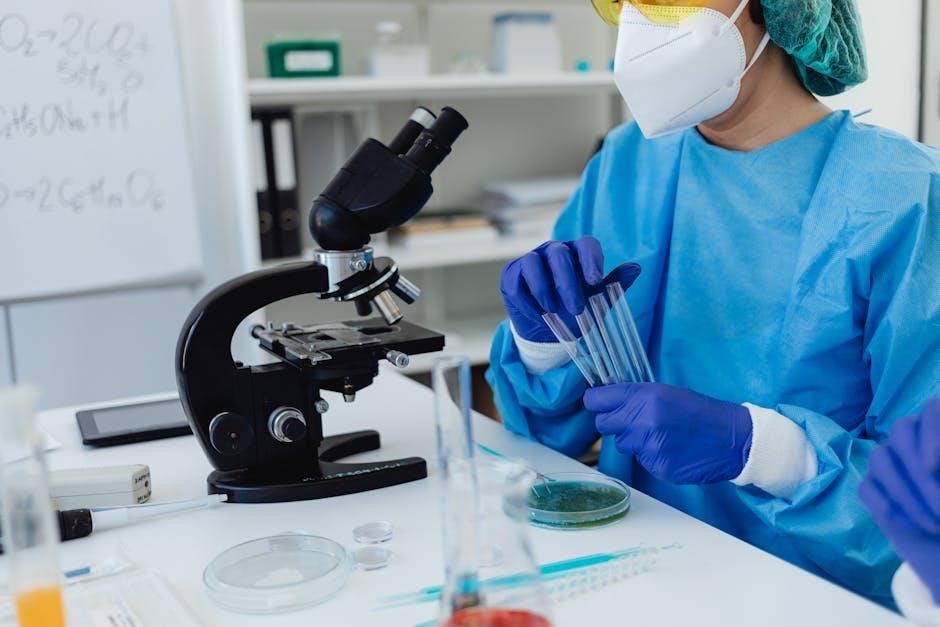
A foundational understanding of biochemistry is crucial for comprehending life processes. This section begins with a review of atomic structure, chemical bonding, and the properties of essential biological molecules – carbohydrates, lipids, proteins, and nucleic acids. Students will explore how these molecules interact to form the building blocks of cells and tissues.
Special attention is given to the concept of pH and its significance in biological systems. Students will learn about acids, bases, buffers, and the role of pH in enzyme activity and cellular function. Practical exercises will involve preparing solutions, measuring pH using indicators and meters, and understanding the importance of pH control in experiments.
Chapter 3 provides a detailed exploration of these concepts, laying the groundwork for understanding more complex biochemical processes encountered in subsequent laboratory exercises.
Essential Laboratory Techniques
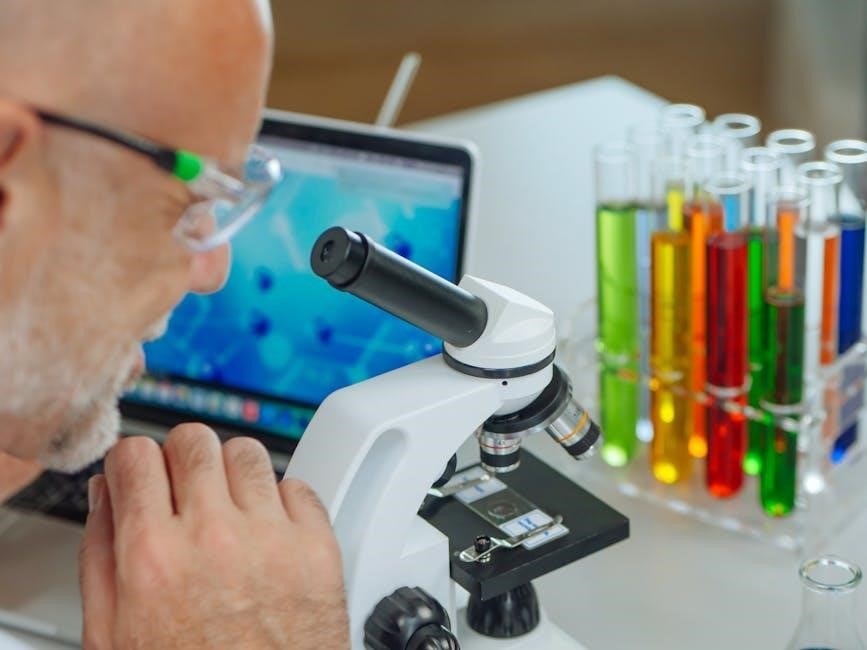
Mastering core techniques – microscopy, spectrophotometry, and sterile handling – is vital for accurate biological investigations and reliable experimental outcomes.
Microscopy: Principles and Practice
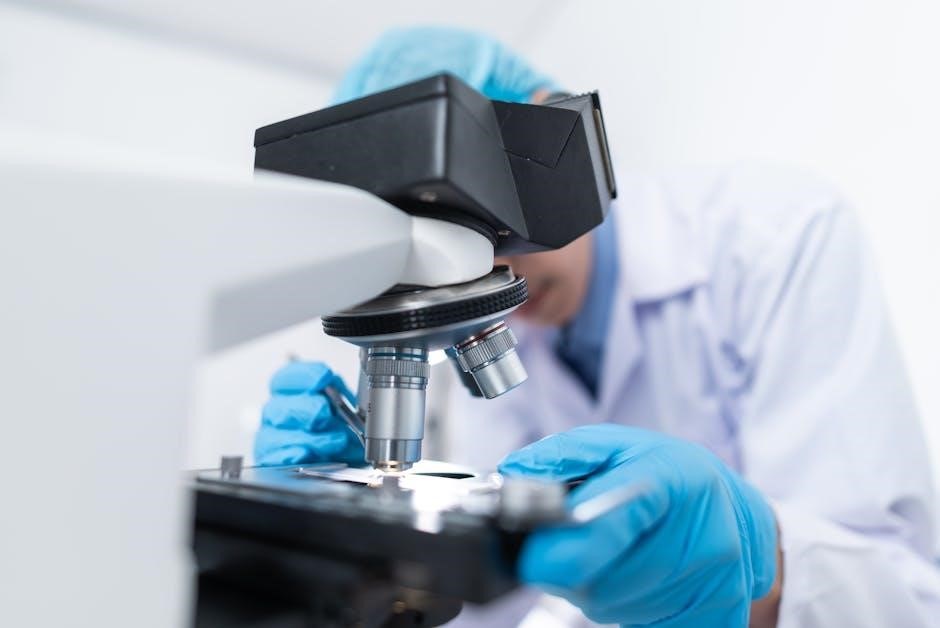
Microscopy forms a cornerstone of biological study, enabling visualization of structures beyond the naked eye’s capability. This section details the compound microscope, a fundamental tool in introductory biology labs. Students will learn the principles of magnification, resolution, and illumination, crucial for obtaining clear and informative images.
Practical exercises will guide students through proper microscope handling, slide preparation techniques, and focusing procedures. Emphasis will be placed on understanding different objective lenses and their corresponding magnification powers. Furthermore, students will practice techniques for observing various biological specimens, learning to identify key cellular components and structures.
The manual will also cover troubleshooting common microscopy issues, such as adjusting light intensity and resolving image clarity. Ultimately, this section aims to equip students with the skills necessary to confidently utilize microscopy for accurate observation and analysis in subsequent laboratory exercises.
Spectrophotometry and Colorimetry
Spectrophotometry and colorimetry are essential techniques for quantifying substances based on their light-absorbing properties. This section introduces the principles behind these methods, explaining how molecules interact with light at specific wavelengths. Students will learn about the spectrophotometer, its components, and its application in measuring absorbance and transmittance.
Practical exercises will focus on creating standard curves, allowing for the determination of unknown concentrations of colored solutions. Students will explore Beer-Lambert’s Law and its significance in quantitative analysis. The manual will detail proper calibration procedures and techniques for minimizing errors in spectrophotometric measurements.
Applications will include analyzing enzyme kinetics and determining the concentration of biological molecules; This section aims to provide students with a solid understanding of spectrophotometry and colorimetry, enabling them to apply these techniques in various biological investigations.
Sterile Technique and Aseptic Transfer
Maintaining sterility is paramount in biological research to prevent contamination and ensure reliable results. This section details essential sterile techniques, including proper handwashing, surface disinfection, and the use of autoclaves for sterilization. Students will learn the principles of aseptic transfer, minimizing microbial introduction during procedures.
Practical exercises will focus on working with bacterial cultures, utilizing laminar flow hoods, and employing sterile loops and pipettes. The manual will emphasize the importance of flame sterilization and proper handling of culture media. Detailed protocols for preparing sterile solutions and disposing of biohazardous waste will be provided.
Students will practice techniques to avoid contamination, understand the consequences of improper sterile technique, and develop skills crucial for conducting microbiological experiments with accuracy and safety.
Specific Laboratory Exercises
This section details hands-on experiments covering enzyme activity, cell structure, and biological specimen observation, fostering a deeper understanding of core biological principles.
Enzyme Activity and Factors Affecting It
This exercise investigates the fascinating world of enzymes, biological catalysts crucial for life’s processes. Students will explore how enzymes accelerate reactions without being consumed, focusing on specific enzyme activity measurements. The lab delves into factors influencing enzyme efficiency, such as temperature, pH, and substrate concentration.
Through experimentation, students will observe how deviations from optimal conditions impact reaction rates, demonstrating the concept of enzyme denaturation. Data analysis will involve graphing and interpreting results to determine optimal enzyme function parameters. This hands-on approach reinforces understanding of enzyme kinetics and the importance of maintaining cellular homeostasis.
Furthermore, the lab emphasizes the practical applications of enzyme studies in fields like medicine and industry, highlighting their role in diagnostics and various biotechnological processes. Careful observation and precise data collection are paramount for accurate conclusions.
Cell Structure and Function
This laboratory focuses on the fundamental building blocks of life: cells. Students will utilize microscopy to observe diverse cell types – plant, animal, and potentially bacterial – identifying key organelles and their respective functions. Emphasis will be placed on understanding the correlation between cellular structure and specialized roles.
The exercise includes detailed observation of cell walls, nuclei, cytoplasm, and other essential components. Students will learn to differentiate between prokaryotic and eukaryotic cells, recognizing the complexity of eukaryotic organization. Techniques like staining may be employed to enhance visualization of cellular structures.
Data collection will involve detailed drawings and descriptions of observed cells, fostering observational skills and scientific illustration techniques. This lab reinforces the understanding that cells are the basic units of structure and function in all living organisms, laying the groundwork for further biological studies.
Observation of Biological Specimens
This section cultivates essential observational skills crucial for biological study. Students will examine a variety of preserved and prepared biological specimens, ranging from simple organisms to more complex tissues. The focus is on developing proficiency in using microscopes and other observational tools.
Specimens may include prepared slides of plant and animal tissues, insects, and microorganisms. Students will practice proper slide preparation techniques, focusing on mounting and staining to enhance visibility. Detailed observations will be recorded through drawings, descriptions, and measurements.
Emphasis will be placed on accurate identification of key features and structures within each specimen. This lab reinforces the importance of careful observation, detailed documentation, and the ability to draw conclusions based on empirical evidence – foundational skills for any biologist.
Safety Protocols in the Bio Lab
Prioritizing safety is paramount; this section details handling biological materials, chemical safety, and proper disposal procedures for a secure lab environment.
Handling Biological Materials
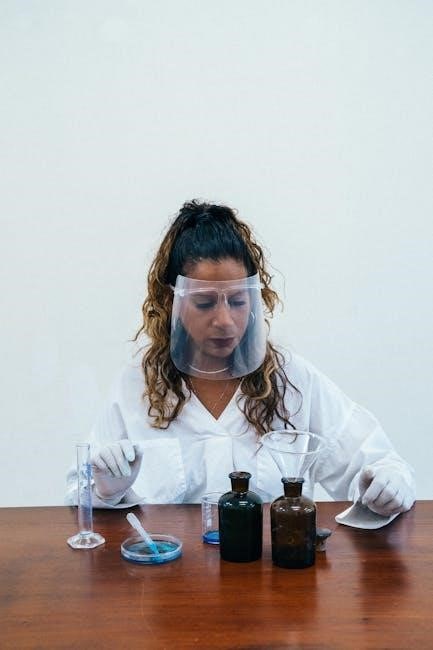
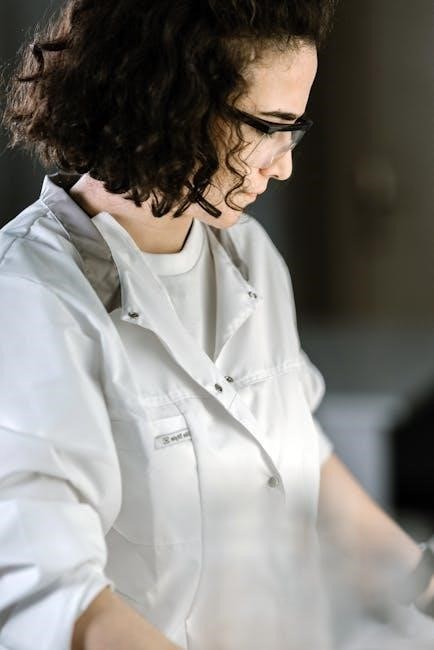
Safe handling of biological specimens is crucial in any biology laboratory setting. All materials must be treated with respect, assuming potential biohazards, even if seemingly harmless. Proper personal protective equipment (PPE), including gloves, lab coats, and eye protection, is mandatory at all times when working with biological substances.
Detailed protocols for specific organisms or tissues will be provided with each exercise, outlining necessary precautions. Contaminated materials – such as petri dishes, swabs, and gloves – must be disposed of in designated biohazard containers, following established laboratory guidelines.
Spills should be immediately reported to the instructor and cleaned up using appropriate disinfectants. Strict adherence to aseptic techniques minimizes contamination risks and ensures accurate experimental results. Remember, responsible handling protects both the researcher and the integrity of the scientific process.
Chemical Safety and Disposal
Working with chemicals demands strict adherence to safety protocols. Always wear appropriate personal protective equipment (PPE) – gloves, safety goggles, and lab coats – to prevent skin and eye contact. Familiarize yourself with the Safety Data Sheets (SDS) for each chemical, understanding potential hazards and first-aid measures.
Chemicals must never be mixed unless explicitly instructed, as dangerous reactions can occur. Proper labeling of all containers is essential, including date and contents. Waste disposal is critical; never pour chemicals down the drain unless specifically authorized.
Designated waste containers are provided for different chemical types – acids, bases, solvents, etc. – and must be used accordingly. Spills require immediate attention: notify the instructor and follow established cleanup procedures. Responsible chemical handling safeguards both personal safety and environmental protection.
Customization and Adaptability
This bio lab manual is designed with flexibility in mind, recognizing the diverse needs of biology courses. Its breadth of coverage allows instructors to select exercises aligning with specific course objectives and student levels. The modular structure facilitates easy customization, enabling the creation of tailored lab experiences.
Institutions can choose to include only the exercises relevant to their curriculum, streamlining the manual for focused learning. A dedicated unit supports courses emphasizing human biology, offering specialized experiments. Adaptability extends to experiment modifications, allowing instructors to adjust procedures based on available resources and class size.
The manual’s tested exercises ensure student engagement and comprehension, regardless of course orientation. This ensures a relevant and effective learning experience for all students.